Friday, 3 July 2020

The Metaphysical School of Poetry

The Metaphysical School of Poetry

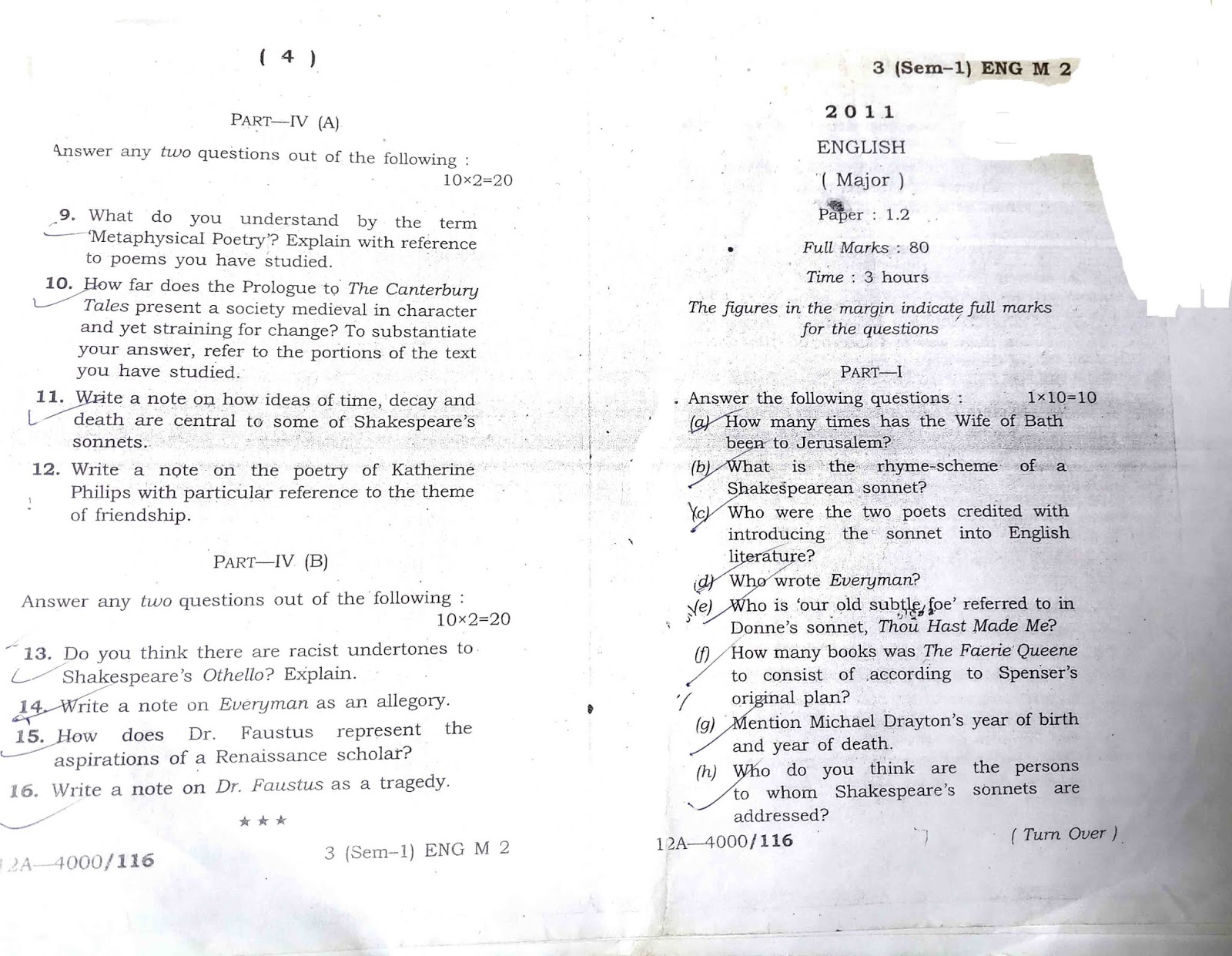
The term “metaphysical” means beyond the physical. The major poets of 17th Century English Literature belonged to this school of metaphysical poetry writing, which explored and upheld the fusion of intellect and emotion. Literary critic and poet Samuel Johnson first coined the term “metaphysical poetry” in his book Lives of the Most Eminent English Poets (1179 – 1781) (Life of Cowlie section). It was also used by John Dryden to describe Donne’s poetry. Some common metaphysical questions include Does God Exist? Is there a difference between perception and reality? Is free-choice not existent i.e, is fate pre-determined? Is consciousness limited to the brain? In this school certain methods were rigorously followed. They include a rare clarity and freshness of vision, a harmonious blending of wit and emotion, use of stock metaphors, the abundant use of conceits, use of environmental images, a lyrical flow of thought and verse and the manifestation of divinity in nature.
John Donne (1572 – 1631)
All discourse on metaphysical poetry must begin with John Donne who was especially noted for being hailed as the father of the “metaphysical school of poetry”. He was not only a poet, but also a lawyer, priest and satirist. Critics describe his style as inventive, strong, dramatic and sensual – that of a womanizer despite being religious. He wrote Love Poetry, Religious Poetry and Elegies and Satires. One of his most exemplary love poems is The Good Morrow, meaning wishing one’s beloved good morning. He compares his beloved and himself to two hemispheres of the globe to form one complete whole. Another of his love poems is A Valediction: Forbidden Mourning. His religious poetry includes The Progress of the Soul and The Anatomy of the World. His satires are a deliberate imitation of the Greek writer Persius. He also composed poems like The Flea and The Canonization.
In John Donne’s poetry there is a sense of miraculous exemption from time and all its entanglements. The freedom from temporal and spatial boundaries is one of the foremost features of Donne’s poetry. He takes into his purview of discussion the universal cause and explores in details the mysteries of human life and emotions. There is a lucid and candid expression and a field of joyous liberty. He also composed 26 holy sonnets along with two other sonnets which are derogatory in nature, after 1610. Their form is quintessentially Petrarchan and their themes refers to different aspects of his personality. His deep faith in divinity led him to compose sonnets which were  extensively replete with his sense of devotion and conviction in love. The sonnets vary greatly in their value. The themes involve his personal sense of limitations, his fears, his inadequacies and especially his thoughts about judgement day. They are philosophical speculations about the reality of human existence. His poetry was a reaction to the fluency and exuberance of Elizabethan poetry.
Andrew Marvel (1621 – 78)
Andrew Marvel is best known for his elaborate poem on the theme of Carpe diem or “Seize the Day”- To His Coy Mistress. Marvel’s poem is characterized with urbane energy which flows through the lines of the poem. The sense of romantic vastness and love for his beloved charged with remarkable intensity has been portrayed most artistically through the poem. The poem, incorporates various poetic conventions from French and Italian love poetry. The sense of immediacy is provided by a typical poetic situation. The poet exhorts his beloved to consummate their love lest time prevents it. As Marvel belongs to the metaphysical school of poetry, his poems uphold certain significant metaphysical features. In his poetry we come across an elegance and precision of style, polish and diction, regular rhyme and meter, persistent use of couplets and extensive irony of theme. He is a rather intelligent poet. Nevertheless, it is noticeable that in Marvel, there are some variations from the common features of the metaphysical school. We do identify a ruggedness of style and a very bold use of colloquialisms of daily conversation – sometimes bordering on the gross. Perhaps he tried to bring about a fusion between the metaphysical and Jonsonian styles. His poetry has a haunting, memorable and intellectual quality. T.S. Elliot had once commented –
“In Marvel’s poetry one may find a tough reasonableness beneath slight lyrical grace.”
Marvel’s other poems include Horatian Ode upon Oliver Cromwell’s return from Ireland. There are also other poems on Cromwell- The First Anniversary of the Government and Under His Highness, the Lord Protector. Marvel was clearly appreciating Cromwell’s government and personality in heroic couplets in the latter. He was a Puritan and his poems were circulated in manuscripts among his friends, published posthumously. Another of his famous poems is The Garden.
George Herbert (1593 – 1633)
The rhythm and intensity of Herbert’s poetry resembled those of the Provencal poets. Herbert’s poetry celebrates life, energy, rhythm and vitality. He is recognized as “one of the foremost British devotional lyricists.” He has composed 169 poems in 140 stanza patterns. The most popular of his works is The Temple which is a collection full of faith and fervour and also subtlety of thought and ornament. His famous poems include Caller, The Quip and The Pulley. Herbert made extensive use of the technique of conceit. In it, Herbert was experimenting with ‘Pattern Poetry’ wherein each stanza represents a picture or an image. His pictorial poems are Easter Winds, The Altar and other religious poems like Trinity Sunday. In The Windows, he compares a righteous preacher to a glass through which God’s light shines more effectively than his words. All his works are visually satisfying as they draw a pattern through the lines. Herbert was introducing a balance of thought and content in his poetry which conferred a regularity of patterns on his verse. Samuel Taylor Coleridge wrote of Herbert’s diction that “Nothing can be more pure, manly, or unaffected”.
Legouis Kazamian says that Herbert –
“is the saint of the metaphysical school…often gives an impression of a sort of sublimity”
Henry Vaughan (1621 – 95)
Vaughan is a religious metaphysical poet. He is chiefly known for the religious poetry contained in Silex Scintillans, published in 1650, with a second part published in 1655. He was greatly inspired by George Herbert. He uses several tricks of Herbert’s style like abrupt openings, ejaculations and whimsical titles. He found God not in the Bible but in nature. In his poem The Retreat, he quite symbolically explores the retreat into one’s childhood, from childhood back to infancy, from infancy to the pre-lapsarian stage of the fall before the birth of human life on Earth. Vaughan explores the belief that the divine almighty power is invested in nature or the environment that surrounds us. He says in it –
“They are all gone into the world of light”
We are born for a purpose upon the completion of which we would have to return to the Almighty. It is this one governing impulse, that characterizes Vaughan’s poetry. In Childhood, he yearns for a place full of love and harmony, a utopian world that is. He is preoccupied with his religious philosophies and his poems are like a prayer invoking divine presence. They paved the way for the Caroline school of poetry (the poetry of Herrick, Waller and Lovelace). The question of whether William Wordsworth knew Vaughan’s work before writing his ode Intimations of Immortality from Recollections of Early Childhood has puzzled and fascinated those seeking the origins of English romanticism. Both poems clearly draw on a common tradition of romantic images to heighten their speakers’ presentations of the value of an earlier time and the losses experienced in reaching adulthood. His style is free from complications as seen in the poem The World.

Monday, 13 January 2020

MCQ on english literature


(1) who among the following, is not an Australian writer?:
(A)Patrick White
(B) Les Murray
(C) Alice Munro
(D)Peter Carey 

Ans: c Canadian
(2)‘Which English poet was Sylvia Plath married to?:
(A) Hughes
(B) Masefield
(C) Rilke
(D) Larkin 

Ans: A
(3)The name of the central character in Things Fall Apart is:
(A) Okonkwo
(B)Kurtz
(C) Adisa
(D) Barack Ans: A
(4) Sidney’S Defence of Poesie was written in response to:
(A) Poetics
(B) The Courtier
(C) The School of Abuse
(D) On the Sublime Ans: c
(5) What is the name of the storyteller of One Thousand and One Nights?:
(A) Alf Layla
(B) Noorjehan
(C) Sultana
(D) Scheherazade Ans: D
(6)Which is Charles Dickens’s first novel’?:
(A) David Copperfield
(B) The Pickwick Papers
(C) Oliver Twist
(D) Little Dorrit Ans: B
(7)Pablo Neruda belongs to:
(A) Peru
(B) Cuba
(C) Chile
(D) Argentina Ans: c

(8)The Diary of Anne Frank was originally published in: 
(A) Dutch
(B) German
(C) French
(D) English Ans: A
(9)Which book won the first Man Booker prize?:
(A) Heat and Dust
(B) Midnight’s Children
(C) The Luminaries
(D) Something to Answer  For Ans: B


 (10) Who  is the author of Around the World in Eighty Days?
A)HG Wells
(B) Jules Verne
(C) Thomas Hardy
(D) Mark Twain Ans: B
(11)which play
does “Forest of Arden” figure?:
(A) Much Ado About Nothing
(B) Richard II
(C) As You Like It
(D) Hamlet Ans: C
(12)Who wrote the book The Republic?:
(A) Aristotle
(B) Socrates
(C) Horace
(D) Plato Ans: D
(13)In Marlowe’s play, what
was the name of the Jew of Malta
(A) Shylock
(B) Barabas
(C) Solomon Ans: B
,(D)Lazarus
(14)The setting of the poem “The Solitary Reaper” was inspired by the poet’s stay in:
(A) Scotland
(B) France
(C) England
D) Wales Ans: A
(15)An edition of Mulk
Raj Anand’s The Untouchable carries a foreword by:
(A) Mahatma
Gandhi
(B) D H Lawrence
(C) Henry James
(D) E M Forster Ans: A
(16)In The Pride and Prejudice, the Bennet family lives in the village of:
(A) Pemberley
(B) Mansfield
(C) Longbourn
,(D) Brighton Ans: C
(17). Showalter begins her essay ‘Feminist Criticism in the Wilderness’ by discussing a
dialogue between
(A) Carolyn Heilbrun
and Catherine Stimpson
(B) Bell hooks and Judith Butler
(C) Virginia Woolf and Kate Millet
(D)Nancy Frazer
and Angela Davis Ans: A
(18) Which the month is the cruellest in ‘The Waste
Land’
(A) March
(B) April
(C) December
(D)
January Ans: B


(19) Which among the following, is not written by Keats?:
(A) Ode to Psyche
(B) Ode on Melancholy
(C) Ode to the West Wind
(D)Ode to a Nightingale Ans: C
(20) Who is Shock in The Rape of the Lock?:
(A) Belinda’S Dog
(B) Belinda’S Angel
(C) Belinda’S Maid
(D)Belinda's Beau Ans:A
(21)The term ‘Theatre of the Absurd’ was coined by:
(A) Martin Esslin
(B) Samuel Beckett
(C) J L Stayan
(D) John Osborne Ans:A
(22)According to Aristotle, Epic presents men:
(A) As they are
(B) Worse than they are
(C) Better than they are
(D)As they ought never to be Ans: C
(23)‘Hearing’ a colour or ‘Seeing’ a smell is an example of:
(A) Synaesthesia
(B) Oxymoron
(C) Hyperbole
(D) Assonance Ans: A
24. Aspects of the Novel is written by:
(A) David Lodge
(B) E M Forster
(C) Henry James
(D) Walter Allen Ans: B
(25)The Lay of the Last Minstrel’ is written by:
(A) Wordsworth
(B) Coleridge
(C) Walter Scott
(D)Shelley Ans: C
(26) Who  is the author the work Simulacra and Simulations?:
(A)Jean Francois Lyotard
(B)Jean Baudrillard. 
(C)Julia Kristeva
(D)Roland Barthes Ans: b
(27) What is the subtitle of the play Twelfth Night?:
(A) Or, What you Want
(B) Or, What you Think
(C) Or, What you Like
(D)Or, What you Will 

Ans: D


 .


(28) Who is Afraid of Virginia Wolf?’ IS a:
(A) play by Edward Albee
(B) novel by Melville
(C) essays by Sylvia Plath 

(D) poem by Kamala Das Ans: A
(29) The Trotter Nama is written by:
A) Ruskin Bond
(B)Vikram Seth
(C) Amit Choudhuri (D)Allan Sealy Ans:D
(30)Saki’ is the pen name of:
(A) Somerset Maugham
(B) William Hazlitt
(C) HH Munro
(D)Robert Burns Ans: C
(31) When was Paradise Lost published?:
(A)1669
(B)1667 A
(C)1657
 (D) 1659 Ans: B

(32) Shelly's ‘Adonais’ is an elegy on the death of: (A) Donne
(B) Byron
(C) Keats
(D)Milton Ans: C
(33) Who wrote the poem ‘The Defence of Lucknow’?:
A) Tennyson
(B) Yeats
(C) Browning
(D) Swinburn Ans: A
(34)which country is Macbeth set?:
(A)
Denmark
(B) Scotland
(C) Spain
(D) Germany Ans: B
(35)‘Rain races, ripping
and restless in its rage.’ This sentence is an example of a/an:
(A) oxymoron
(B) hyperbole
(C) personification
(D) alliteration Ans: D
(36)Who is the author of Piers Plowman?:
(A) Sir Thomas Malory
(B) Geoffrey of Monmouth
(C) William Langland
(D) Geoffrey Chaucer Ans: C


 (37) Who wrote: ‘Shall I compare thee to a summer’s day/ Thou art more lovely and more
temperate...’?:
(A) Shakespeare
(B) Milton
(C) Donne
(D) Marlowe Ans: A
(38)Who wrote The Dunciad’?:
(A) Milton
(B)Gay
(C) Dryden 

(D) Pope Ans: D
(39) In Coleridge’s poem ‘The Rime of the Ancient Mariner’, where were the three gallants going?:

(A) A funeral
(B) A birth ceremony
(C) To the church
(D) A wedding Ans: D
(40) Who  is credited to have written the Panchatantra?:
(A) Banabhatta
(B) Vishnu Sharma
(C) Abhinavagupta
(D) Kalidasa


S


Ans B


Thursday, 21 November 2019


1. Who among the following is a 16th-century poetess?
(A) Katherine Philips (B Aphra Behn
(C) Lady Mary Wroth (D) Anne Killigrew

Ans:c
\2. Masques are
(A) masks worn during dances
(B) courtly entertainment
(C) performed in public
(D) operatic performances 

Ans B
3. Shakespeare’s Company was known as
(A) King’s Men
(B) The Duke’s Man
(C) The Salisbury Group
(D) The Admiral’s Men 

Ans:A
 4. He was the Lord Chancellor to Henry VIII and later executed for his religious belive, Identify the famous book written by him.
(A) Utopia
(B) The Leviathan
(C) The Book of Common Prayers
(D) Religio Medici 
Ans A
5. The York Cycle comprises of
(A) 24 mystery plays
(B) 48 morality plays
(C) 48 mystery plays
(D) 24 morality plays

Ans:c
 6. Magna Carta was signed in 1215 as a treaty for peace by
(A) King
O1 of England and the King of France
(B) king john  of England and a group of rebel barons
(C) the archbishop of Canterbury and a group of rebel barons 

(D) the Archbishop of Canterbury and the King of France
Ans:B
7. The Wars of the Roses was fought between
(A)House of York and the House of Lancashire
(B) the House of Cambridge and the House of York
(C) the House of Salisbury and the House of York
(D) the House of Lancaster and the House of York

Ans:A
 8. Morte  d'Arthur was written by
(A) Sir Thomas Moore
(B) Henry Howard
(C) Sir Thomas Malory
(D) Sir Thomas Wyatt 

And:c
9. is considered the first tragedy among the English plays.
(A)
Ralph Roister Doister (B) Gorboduc
(C) Needle (D) Edward  Two
Ans:b
10. Sir Francis Drake’s circumnavigation of the world took place between
(A) 1557-1580 (B) 1580-1583
(C)1577-1579 (D) 1580-1584 

Ans:c
 11.  How does Lady Macbeth explains her husband wild behaviour at the banquet?
(A) She
tells the guests that banquet’s ghost is haunting Macbeth
(B) She reveals that
Macbeth 1 mourning the death of Duncan
(C) She tells the guest that Macbeth was drunk.
(D)She informs the guests that Macbeth  ill and will recover Soon.

Ans d
 12. The Spanish Tragedy was pub1ish in
IA) 1591 (B 1592
(C) 593 (1)) 1594 Ans:B
13. The Defence of poesy is a work of
(A) poetry (B) criticism (C) drama (D) short story 
Ans:B
 14. Choose the correct chronology
(A) TimberlinThe Massacre at Paris; Dido, Queen of Carthage; Doctor Faustus
(B) Timberlin, Dido Queen of Carthage Doctor Faustus;  The Massacre at Paris 
(C) Doctor Faustus; The Massac at ParisTamburlaine; Dido, Queefl of Carthage
(D) he Massacres at Paris; Tamburlaine ’ Dido, Queen of Carthage Doctor Faustus
Ans B


 15. Identify the University Wits.
(A) Christopher 
Marlowe, William ShakC8PeaT John Webster, Thomas Nashe
(B) Robert Greene, John Done Philip Sidney, John Lyly
(C) John Webster, Robert Greene, William Shakespeare, Philip Sidney (D) Christopher Marlowe Robert Greene, John Lyly Thomas Lodge
Ans:D


16. The
poems Jabberwocky is from
(A)
Alice in Wonderland(B) Through the Looking-Glass
(C) The Water-Babies (D) The Woman in White 
Ans:B
17. In which novel would you find the characters Dorothea Brooke, Will Ladislaw, Rosamond Vincy and Celia Brooke’? (A) Middlemarch (B) North and South
(C) Mary Barton (D) Daniel Deronda 
Ans:A
18. The title of Thomas Hardy’s novel, Far from the Madding Crowd was drawn from the poem
Elegy Written in a Country Churchyard
(B) Ode on a Grecian Urn
(C) The Scholar-Gipsy
(D) Dover Beach
Ans:A
19. Bertha Mason is a character in the novel
(A)
Great Expectations (B) Oliver Twist,(c) Jane
Eyre (D) Wuthering Heights 
Ans:C
20. Which city became the centre of Western civilization by the mid-nineteenth century?
(A) Paris (B) New York
(C) London (D) All of the above

Ans:C

 21. What did Kipling mean by “white man’s” Burden’?
(A) The British’ destiny to industrialize   the world
(B) The moral responsibility of the British  to colonize  and educate its subject
(C) A Chartist sentiment, (D) The importance of solving economic and social problems in England
Ans:B
22. In which of the following texts was the idea of the ‘Angel of the House most clearly propounded?
(A) Lord Alfred Tennyson’s princess
(B) Charlotte Bronte’s Jane Eyre
(C) John Ruskin Of Queen’s Gardens(D) Oscar Wild’s Importance of Being Earnest
Ans: C
23. Which is the last novel by Thomas Hardy and when was it published’
(A) Jude the Obscure; 1895
(B) The Woodlanders 1898
(C) Jude the Obscure; 1899
(D) The wood1anders 1896
Ans:A
24. The Picture of Dorian Gray was written by
(A) 
Charles Dickens
(B) Thomas Hardy
(C) Oscar Wilde
(D) H. G. Wells 

Ans: C


 25. When was Charles Darwin’s The origin of Species  pb1ished?
(A) 1857 (B) 1858
(C)1859 (D) 1860 

Ans:C
26. What is common between Dante Gabriel Rossetti, William  Michael Rossetti, Holmount hunt and John Everett Mi1lis?
(A) They started the Oxford Movement
(B) They were all born in India
(C)
They were the part of the Pre-Raphaelite Brotherhood
(D)) They were dramatists 
Ans: C
27. Who, according
to Matthew Arnold, among the following writers is not a Touchstone Poet?
(A) John Dryden
(B) William Shakespeare
(C) Dante Alighieri
(D)
Virgil 
Ans:A
28. Among the Literary Movements listed below, which did not take place in the Victorian Period?
(A) Oxford Movement
(B) Aesthetic Movement
(C)
Pre-Raphaelite Movement
(D) The Imagist Movement 

Ans: D
29. In which year did Queen Victoria adopt the
title of Empress of India?
(A) 1874 (B) 1857
(C) 1876 (1)) 1859 

Ans: C
30. Marlow is the narrator in the novel
(A)
Heart of Darkness
(B) A Portrait of the Artist as a Young Man
(C) To the Lighthouse
(D) Mrs Dalloway
Ans:A
 31. Milton’s primary argument In the text is on freedom of speech and expression What Is the
name
of the text?
(A) Pradise Lost
(B) Areopagitica
(C) Essay on Man
(0) Ballad of Heaven and Hell
Ans: B
32. Moll Flanders in Defoe’s novel is born in
(A) America (B) Bath
(C) Newgate (D) Scotland
Ans: c
33. Aurora Leigh’s mother is not English in Elizabeth Barrett Hrownmg’s poem. She is
(A)
French (B) Tuscan
(C) African (D) German 

Ans: B
34.
Mein Kampf is the autobiography of
(A) Hitler (B) Botticelli
(C) Michael Angelo (D) Dali 
Ans:A
35. The Tatler was first published by
(A) Addison (B) Steele
(c)) Dryden
(D) Swift


Ans: B
 36. Walt Whitman wrote Leaves of grass celebrating  
(Al capitalist
(B) colonization
(C) dictatorshi
(D) democracy 

Ans: A
37• In The Scarlet Letter, Hester must Wear  the letter
(A)Z (B)D
(C)A (D)S 

Ans: C
38.
Where is the fictional setting of the novel. Emma?
(A) Highbury
(B) Highlands
(C) London
(D) Edinburgh 
Ans:A
39• E.S P. Ode pour I’ election de son sepulchre’ (E. P. Ode or the Choice of His sepulchre) is the title of a section of the famous poem
(A) Hugh Selwyn Maubertey
(B) Ash Wednesday
(C) Geoffrey Hill
(I)) None of the above
Ans: A
40.
Saints should always be judged guilty until they are proved innocent, but the tests that have to be applied to them are not, of course, the same in all cases.’ This is the first line of a famous essay by George Orwell. Who was the subject of this essay?
(A) Leo Tolstoy
(B) Albert Schweitzer
(C) Bertrand Russell
(D) Mahatma Gandhi 
Ans: D


 41. The name of Ben Johnson Was play based on a fair is
(A) Smithfield Fair
(B) Mayfair
(C) My Fair Lady
(D)) Barthlomoeo  Fair

Ans: D
42. Who among the following is not  the Restoration playwright?
(A)Congreve
(B) Etherege
(C) Aphra
Behn
(D) Catherine Gore 
Ans: D
43. Adam in Milton’s
Paradise Lost Was OVer cOme by
(A)
God’s authoritY
(B)
female charm
(C)female fear
(D))
love 
Ans: B
44.
Who wrote the text, The principles of Biology (1863)?
(A) Charles Darwin
(B) Erasmus Darwin
(C) Herbert spencer
(D)
J. S. Mill 
Ans: C
45.
The idiom ‘argue the toss’ means
(A) cheer
for loss
(B) argUe with
spouse
(C) dispute a decission
(D) argue with the teacher

Ans: C
 46. In the room, the women come and go talking of Michal Angello
How many times do the following lines occur in
 the poem Love Song of J. Alfred Prufrock
(A) Once (B) Twice
(C) Thrice (I)) Four 
Ans: A
47. An aged man is but a
____ thing.
A tattered coat upon a stick...’
Fill in the blank.
(A) insignificant (B) paltry
(C) miserable (D) worthless 

Ans: B
48.
Lupercal is a poetry collection by which modem poet?
(A) Simon Armitage
(B) Ted Hughes
(C) John Agard
(D) Carol Ann Duffy 

Ans: B
49. The Pylons Poets’ take their name from a poem with a similar name written by
(A) W. H. Auden
(B) Louis MacNeice
(C) Cecil Day-Lewis
(D) Stephen Spender 

Ans: D
50. Identify the correct chronological order of Charles Dickens’ novels.
(A)
Sketches by Boz, Oliver Twist, A Christmas Carol, Bleak House
(B) Oliver Twist, Sketches by Boz, A Chrislrrw.s Carol, Bleak House
(C) A Christmas Carol, Bleak House, Oliver Twist, Sketches by Boz
(D) Bleak House, Oliver Twist, Sketches by Boz, A Christmas Carol 
Ans: A
51. Who among the following was not in the Bloomsbury group?
(A) Virginia Woolf
(B) J.
M. Keynes
(C) E. M. Forster
(D) W. B. Yeats


Ans: D
 52. “Yet let’s go..”
?? they do nor ‘move.
These are the last lines of the play
(A) Myth of Sisyphus
(B) Waiting  for Godot
(C) The Zoo Story
(D) Rosencrantz and Guildenstern are dead
Ans: B
53. The only novel by Sylva  Plath  is
(A) The Bell Jar
(8) The Iron Men
(C) The Idiot
(I)) The Queen of the Night 
Ans: A
54. In which work do you find Captain Bluntschi, a Swiss army Officer?
(A)
All Quiet on the Western Front
(13) War arid Peace
(C) Arms and the Man
(D) The Red
Badge of courage 
Ans: C
55. He was found by the Bureau Of Statistics to be One against whom there was no official complaint,
These are the opening lines of the famous modem poem
(A) The Unknown
(B) The Unknown Soldier
(C) The Unknown Citizen
(D) An Unknown Girl


Ans: C


• b


 56. This Supplement his income from poetry by writing a detective novel  under the
pseudonym Nichola Blake. identified the  poet

A) w. H. Auden
(B) Ted Hughes
(C) Cecil Day-Lewis
(D) Luis  Macnice

Ans: C
57.VLADIMIR: One out of four Of the three they don’t mention any thieves at all and the third says that both of them abuse him.
ESTRAGON : WHO
In this lines from Waiting for Godot the thieves refer to
(A) the two thieves who rob and beat Estragon 
(B)Lucky and Pozo
(C)The Two thieves crucified along with Jesus 
(D)  the two boys working for Godot
Ans: C
58 - Few Critics have even admitted that hamlet the play is the primary problem and hamlet the character only secondary. This is the opening line of a famous essay on hamlet. Who is the author?
(A) Ernest Jones            (B) T. S. Eliot

(c) Dr. johnson                      (D) Thomas De Quincey

 Ans B
59 Which IS the chronological order of the from T. S. Eliot’s the wasteland?

(A) The Burial of the Dead, A Game of Chess The Fire Sermon, Death by Water, What the Thunder Said
(B)The Burial of the Dead, A Game of Chess, Death by Water, The Fire Sermon  What the Thunder Said
C) The Burial of the Dead Death by Water, A Game of Chess The Fire Sermon, What the Thunder Said.

(D) The Burial of the Dead, The Fire Sermon A Game Of Chess, Death by Water, What the Thunder Said.
Ans B

60 Under whose, the leadership were the 1916,1917 anthologies of some imagist  poet published
(A)Ezra pound                               (B)  Amy Lowell

(C)Hilda  Doolittle                          ()   Ford Madox Ford
Ans A

Saturday, 8 June 2019

Tense

 Practice: 1.I (see) him a week ago. 2.The boy (sleep) don’t disturb him. 3.  His father (die) before the doctor arrived . 4. If I (be) you,...